
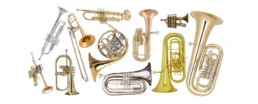
Concert for the end of the Brass Workshops of the Athens State Orchestra
For the 11th year in a raw, the Brass Workshops of the Athens State Orchestra present its annual and festive ending concert of its ninth season.
The workshop is realized with the support of the Philippos Nakas Conservatory and with its collaboration with the Athens State Orchestra.
The Philippos Nakas Conservatory's String Orchestra participates to the concert under the baton of Michalis Papapetrou.

Students of the Permanent Chamber Music Workshop in concert
It is with great joy that the Athens State Orchestra adds the "Permanent Chamber Music Seminar” to its Educational and Social programme from the 2021–2022 season on.

Gala celebration
The New Year’s Eve gala could not but be dedicated to Giacomo Puccini (1858-1924). This year, we have the pleasure of collaborating with the renowned Puccini Festival in Torre del Lago, the city where he lived for more than thirty years and where he composed his masterpieces. In co-production with the CTO and with the valuable assistance of the Italian Cultural Institute of Athens, we welcome to the stage of Megaron the Athens Concert Hall three exceptional performers: Claudia Pavone (Valeria Sepe, the soprano who was initially to sing, couldn't participate due to health issue) the ideal Butterfly in the festive season of the 2024 Puccini Festival; Angelo Villari, a tenor born almost specifically for the great roles of the composer; and Valerio Galli, a great conductor of the younger generation and winner of the famous Puccini Prize. At the heart of the programme are the three great love scenes for soprano and tenor from the famous “atypical trilogy”: La Bohème, Tosca and Madama Butterfly. The duets of Mimi and Rodolfo, Tosca and Cavaradossi, Pinkerton and Cho-Cho-Cho-San are the epitome of Puccini’s lyrical style, with its source of melodic inspiration, orchestral mastery and unsurpassed vocal writing. However, there is also a lesser-known side of the composer, which we will discover in the orchestral excerpts from the – rather unknown – first two operas Le Villi and Edgar, as well as youthful works for orchestra, such as the Symphonic Prelude or the Symphonic Caprice (where the Bohemians already make their appearance, a full thirteen years before the opera was composed). A unique opportunity to reacquaint ourselves with the “maestro” from Lucca and to bow, once again, to his genius.
Musical promenades at the Museums - Climate Changes in Music
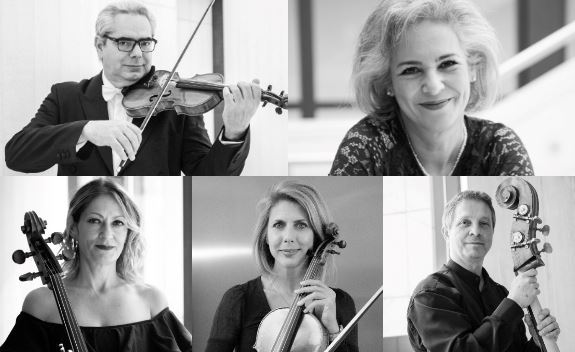
Seasons' rotation, as most natural phenomena, fascinates man throughout the ages and leaves plausibly an imprint in Art. The lively string quintet Quitarco presents three creations inspired by the Four Seasons, one created in the 18th century, another in the 19th century and one in the 20th century. Vivaldi depicts in a naturalistic way episodes of each seasons; David contemplates them through a romantic prism while Piazzola links them sensually with the urban context of Buenos Aires.
At 18.30, one hour prior to the concert, a free guided tour for ticket holders will be offered.
Auditors are kindly requested to be at the Museum at 18.15.

Secret Music Rooms
Is the orchestra on stage, or is it not? Is the audience in the hall, or maybe not? You’re never quite sure where you are, what’s happening, or what might happen next. Only the spectator decides. This is a whimsical game of imagination where the narrator-conductor, with the help of the captivating sound of the symphony orchestra, attempts to unveil the well-hidden secrets of music, one by one. However, unexpected events turn the concert upside down, and nothing seems to go right in the end. Who will get us out of this mess?
A delightful performance for audiences of all ages, blending music, theater, audience participation, and lots and lots of laughter.
Direction, theatre script: Anna-Moscha Cambossou
Actors: Anna-Moscha Cambossou, Yorgos Chatzis

Secret Music Rooms
Is the orchestra on stage, or is it not? Is the audience in the hall, or maybe not? You’re never quite sure where you are, what’s happening, or what might happen next. Only the spectator decides. This is a whimsical game of imagination where the narrator-conductor, with the help of the captivating sound of the symphony orchestra, attempts to unveil the well-hidden secrets of music, one by one. However, unexpected events turn the concert upside down, and nothing seems to go right in the end. Who will get us out of this mess?
A delightful performance for audiences of all ages, blending music, theater, audience participation, and lots and lots of laughter.
Direction, theatre script: Anna-Moscha Cambossou
Actors: Anna-Moscha Cambossou, Yorgos Chatzis

Music day - 2024
The Athens State Orchestra welcomes the Music Day at the Gardens of Megaron with music created by Bernstein, Born, Strauss and Grothe. Panagiota Polyzoidou and Rafailia Kontou are the soloists of the programme. Ilias Voudouris conducts the orchestra.

Pénélope, opera in three acts, concertante
Mysterious, still transparent, like a child’s eyes: these are the words that philosopher Vladimir Jankélévitch uses to describe the music by Gabriel Fauré. In his mature period, the composer, fascinated by Greek Antiquity, draws inspiration from “Odyssey” for his musical drama “Pénélope”, based on a libretto by René Fauchois. The unwavering loyalty of Pénélope, the return of Odysseus to his homeland and the merry conclusion of the myth after the slaughter of the suitors weave an enticing musical universe, echoing the influence by both Gluck and Wagner.
“Pénélope” is the composer’s only opera and is presented for the first time in Greece: the Athens State Orchestra, within the frame of its collaboration with Olympia, and a brilliant cast of French and Greek singers breathe life to the epic heroes, rendering the subtle psychological nuances of the narrative. Among the artists, Olympia welcomes back conductor Pierre Dumoussaud and soprano Catherine Hunold, after their acclaimed performances in the opera “Soeur Béatrice” by Dimitri Mitropoulos.
The Greek piano concerto
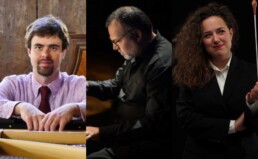
Throughout its long career, the Athens State Orchestra has always served Greek music faithfully, in recognition of its value and its interest. This is what it sets out to do in this concert, too, which is dedicated to the Greek piano concerto. A genre little known, with very few exceptions, but certainly well worth a closer acquaintance, whether the concerto showcases the modernism of Nikos Skalkottas or the multifaceted collaboration between piano and orchestra in the work of Charis Vrontos, whose concerto's première performance this is. The programme peaks with Beethoven's symphony no. 1.